March 24, 2026 • Football • Strength & Conditioning
Inside WVU’s strength program for elite football performance
The goal of the strength and conditioning program at West Virginia University is to provide our student-athletes with the highest physical and mental preparedness on the field of competition. My goal is for our football program to achieve the highest levels of success on a national scale.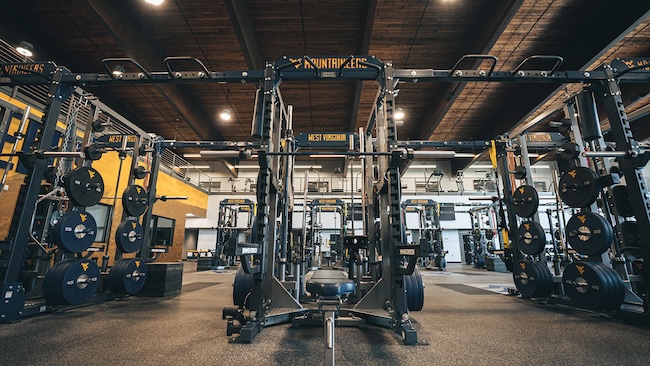
Our staff provides a well-designed, collaborative training program based on sound physiological principles. Each program has a sport-specific focus, using proven methods and safe, productive physical training as part of a periodized plan. Athletes are pushed to maximize their genetic and athletic potential.
Our strength staff uses a hands-on coaching style that allows the student-athlete to train in one of the most intense and technique-focused weight rooms in the country. We are committed to ethical conduct, integrity, and excellence.
The Mountaineer staff uses a variety of training regimens to develop a base level of strength and conditioning in all athletes, with the goal of becoming one of the strongest, best-conditioned, and most explosive teams in the country. Training includes Olympic movements, free weights, dumbbells, kettlebells, medicine balls, sandbags, machines, bands, lifting chains, and manual resistance.
Every time an athlete enters our facility, they are challenged both mentally and physically. The six main goals for each player are:
- Achieve a high level of physical strength
- Develop injury resilience through flexibility, injury prevention, and core development
- Increase athleticism through footwork, agility, and sport-specific movements
- Emphasize speed protocols that improve explosiveness
- Apply conditioning methods that translate directly to game performance
- Build mental toughness, confidence, and competitive edge
Athlete development is the priority, whether the athlete is in the program year-round or during the off-season. Each program is individualized, with goals that include increasing lean mass, improving flexibility, maximizing strength, enhancing speed and power output, and reducing injury risk. Training, nutrition, recovery, sleep, and total wellness are all part of the development process.
Sport Science Implementation
As a strength and conditioning staff, we use sports science technology as a tool to improve training outcomes. The goal is not to change the structure of the program, but to identify opportunities where technology can enhance performance and athlete well-being.
Data collected provides insight into how athletes respond to training demands. This allows coaches to make better decisions about whether physiological adaptations are being achieved during specific training phases.
GPS
Catapult is our primary system for monitoring and managing on-field workload. It allows us to track distance, player load, contacts, speed, and more.
Once collected, the data is compiled into reports for position coaches after each session. Key benefits include:
- Performance Optimization: Managing workloads and monitoring development
- Injury Risk Mitigation: Tracking loads and identifying when to push or scale back
- Support Return to Play: Comparing pre-injury benchmarks during rehabilitation
Velocity-Based Training
Velocity-based training (VBT) is used to maximize performance in strength and power exercises. Using a coach’s eye combined with technology, we track bar speeds, intensities, and loads to evaluate performance.
Progressive overload is applied through movement quality and velocity rather than simply increasing weight. Athletes are trained to move explosively and improve speed output.
Heart-Rate Monitoring
Heart-rate monitors allow us to optimize training, recovery, and performance in real time. We track metrics such as current heart rate, training impulse (TRIMP), aerobic and anaerobic zones, and recovery rate.
This data helps ensure athletes are improving fitness levels while following a structured, periodized program.
Force Plates
Force plates are used throughout the training year to measure countermovement jump output and monitor readiness. These tools assess:
- Readiness
- Lower body power output
- Jump height
- Asymmetries
Custom dashboards flag deviations from baseline performance and provide feedback on training direction.
Hamstring/Posterior Chain
The NordBord system measures hamstring strength and symmetry. Athletes perform eccentric hamstring exercises while force output is tracked.
This data helps identify imbalances, which are strongly correlated with injury risk. Corrective exercises can be implemented immediately when needed.
Reaction/Evaluation
Delsys is a radar-based system that tracks force-velocity profiles for athletes. It allows for time-efficient data collection across multiple athletes.
This system helps identify force or velocity deficiencies and informs individualized training adjustments. It provides consistent monitoring for speed and agility development.
KEY TAKEAWAYS
- West Virginia’s strength program focuses on building strength, speed, and injury resilience through structured, sport-specific training
- Training combines traditional lifting with advanced tools like velocity tracking, GPS, and force plates
- Athlete development is individualized, with emphasis on performance, recovery, and long-term health
- Sports science data is used to guide decisions, not replace coaching philosophy
- Monitoring systems help reduce injury risk and improve return-to-play outcomes
- Mental toughness and competitive readiness are core components of the program
You Might Also Like



Athletic Director Job Description (Unofficial Version):![]()
![]() Event planner
Event planner![]() Crisis manager
Crisis manager![]() Mentor
Mentor![]() Budget wizard
Budget wizard![]() Schedule mastermind
Schedule mastermind![]() Community connector
Community connector![]()
![]() And somehow… they still make Friday night lights happen.
And somehow… they still make Friday night lights happen.![]()
![]() Know an AD who does it all?
Know an AD who does it all?![]()
![]() 🏆 Nominate them for the National Athletic Director Excellence Awards.
🏆 Nominate them for the National Athletic Director Excellence Awards.![]()
![]() coachad.com/cad-awards/
coachad.com/cad-awards/![]()
![]() PlayOn @mondousa @hey-coach @sportafence
PlayOn @mondousa @hey-coach @sportafence