November 6, 2025 •
Navigating NIL in education-based athletics
As the conversation around Name, Image, and Likeness (NIL) continues to evolve in the college landscape, the ripple effect has reached the high school ranks. Dr. Karissa Niehoff, CEO of the National Federation of State High School Associations (NFHS), is among those at the forefront of guiding state associations through the shifting terrain, balancing opportunity with the preservation of education-based athletics.
“We all own our own name, image, and likeness,” Niehoff affirmed. “Kids are tremendous influencers, and they deserve to take advantage of that.” However, she draws a clear boundary: “Where we all land firm… is that students should not be allowed to engage in professional contracts while wearing the school jersey. They do not own that.”
 This core belief underscores the NFHS’s supportive, rather than directive, role. As a federation and not a governing body, the NFHS offers guidance, resources, and legal support to its 51 member associations (plus the Iowa Girls Union). Since June 2022, the number of state associations that permit NIL opportunities has ballooned from around a dozen to more than 40. Many states are proactively adopting language that allows athletes to benefit from NIL while remaining amateurs in the scholastic setting.
According to Niehoff, this strategic move helps protect student-athletes and their schools from legislative overreach and provides clarity for families navigating this new world. “If you don’t do it, the legislature might do it for you,” she warned. “States are trying to get out in front.”
Addressing Legal Concerns and Shady Practices
While questions to the NFHS from state associations have slowed, the organization still fields inquiries about legal pitfalls, shady practices, and trends in NIL engagement. Niehoff pointed to concerning developments, such as collectives of agents or lawyers courting families on social media with promises of deals, some of which end in dashed hopes and financial risk.
“There have been instances where kids signed deals, relocated, and then everything fell through,” Niehoff said. “Some have been promised college entrance or sponsorship that didn’t materialize. Even one bad situation is too many.”
Despite these risks, states like California and New York have emerged as models. Their longstanding familiarity with child contracts, particularly in entertainment, gives them a head start in protecting minors. “They’ve been doing this for years — not just in sport, but in entertainment — and that experience has helped,” Niehoff noted.
Educating the Educators
The NFHS also works closely with organizations like the National Interscholastic Athletic Administrators Association (NIAAA) to provide professional development for athletic directors, coaches, and administrators. Events such as the National Athletic Directors Conference include NIL updates, toolkits, and expert panels.
“We co-sponsor everything from webinars to summits,” Niehoff said. “It’s critical we align our messaging and make sure everyone has what they need.”
At the school level, education is key, but encouragement is a fine line. Niehoff advises administrators and coaches to be informed and aligned without explicitly steering students toward NIL.
“Schools should educate, not encourage,” she explained. “They must be cautious in how they respond to families seeking deals.”
The Widening Equity Gap
Equity remains a pressing concern. While some elite athletes secure NIL deals through club teams or AAU programs, access to those platforms is often limited to families with financial means.
 “More affluent kids have access to training, camps, and technology that give them a leg up,” Niehoff said. “It absolutely can widen the gap.”
That divide is especially noticeable in sports like basketball, baseball, and volleyball, where year-round play and club participation have become prerequisites for making high school teams. In contrast, sports with no-cut policies — like cross country, track and field, and swimming — offer more accessible entry points.
Protecting the Purpose of High School Sports
All of this reinforces the NFHS’s commitment to education-based athletics and amateurism. “We’re kind of the last ones on the hill defending the formative nature of school sports,” Niehoff said. “High school athletics have shifted from being formative to performative.”
» ALSO SEE: Finding & retaining personnel support for athletic contests
To combat that shift, the NFHS is launching a new campaign titled “Protect the Purpose.” The initiative aims to reaffirm the educational mission of high school sports while addressing disruptive trends like NIL abuse, increased transfer activity, and declining sportsmanship.
A Reason for Optimism
Despite the noise, Niehoff remains optimistic. “We’re starting to turn the tide. Officials’ numbers are up 6% from last year. There’s a growing awareness of the purpose behind high school sports.”
For Niehoff, the mission is clear: to ensure that student-athletes can thrive — not just as influencers or performers — but as learners, leaders, and citizens.
“We’ve got to get back to why we do what we do,” she said. “Because at its best, high school sports are about growth, not gain.”
You Might Also Like

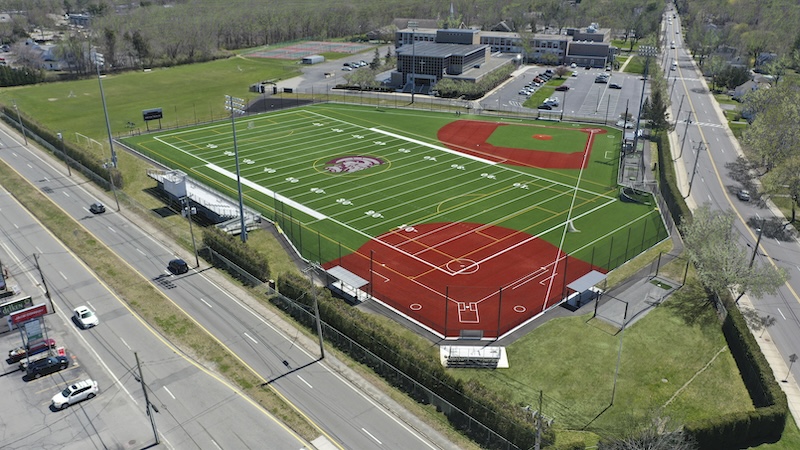


One of the most important economic realities is that football often subsidizes non-revenue sports. Sports such as swimming, tennis, or track rarely generate significant income. Without football’s financial engine, many of these programs would struggle to exist.![]()
![]() At the high school level, football gate receipts may pay for new uniforms for the volleyball team or cover transportation costs for the soccer program.
At the high school level, football gate receipts may pay for new uniforms for the volleyball team or cover transportation costs for the soccer program.
How football revenue impacts overall athletic department finances
coachad.com
From small-town high schools to DI universities, football generates re...