Building bridges between youth sports and high school athletics
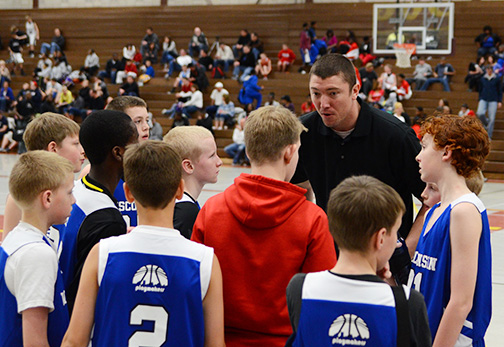
Coaching at the high school level has challenges at every turn. Scheduling conflicts, gym or field space and parents are some of the common hurdles a coach can face on a regular basis. However, year in and year out, coaches are faced with the reality of athletes that come in with deficiencies or weaknesses in their skill level for participation in high school athletics.
Athletes without the necessary skills can have a lasting impact on a team or program. If a team goes into a season with gaps in their technical skills, fundamentals or basic understanding of the game, coaches can face an uphill battle all season.
Athletes with deficiencies in their fundamental skills can be overmatched and overwhelmed quite easily. This will affect their confidence to take risks, push themselves and ultimately will hinder their potential for success. Instead, they revert to their comfort zone of bad habits and reserved play so as not to feel overwhelmed. We see players accept being overmatched rather than overwhelmed all the time.We all know it is easier said than done. Youth programs are typically run by parent volunteers with a wide range of experience from never having played the game to semiprofessional or professional experience.
Regardless, it is vital for a successful athletic department to build a bridge between the youth sports in their town or city and the high school program. Many coaches take a different approach, but all these methods pay off in improved athlete skill and confidence as well as an increased risk-taking as a result of that confidence.
Recognize the youth programs in need
As coaches and parents, we see good and bad youth programs. What are the marks of a youth program that is struggling? What are the telltale signs that they are not addressing the skill, mental, social and individual development of the kids in their programs?
First, they have a philosophy that places winning and competitive structure ahead of skill development and cognitive understanding of the game. Second, they waste time with drills that don’t address a wide variety of fundamentals. They fail to utilize their space, resources and practice time effectively.
Next, these programs focus on what the player is doing wrong instead of teaching them how to do it right. Here is a clear indicator that a youth program is on the wrong path: You see kids standing in lines longer than you see them actively engaged in skills and drills. I recently watched a youth basketball coach tell players that if they lose their opponent on defense they will come out of the game. So, their emphasis on playing defense is centered on just staying with one player. This develops bad habits on the player’s part and never addresses the fundamentals of help defense and communication in switching — all concepts that 10-year-old players can acquire with good coaching.
Programming kids to look over their shoulder at age 10 because of mistakes can have long-lasting effects on confidence and reinforces bad habits rather than fix them.
Walk before you can run
What are the marks of a good youth program?
Coaching education as part of the requirements to work with kids is evident. They have a clear and organized progression of skills ready to teach throughout the practice or season. They have practices where players are engaged, active and moving. There is little or minimal time spent standing in lines waiting for turns. The coaches show and go rather than talk and lecture the team for minutes on end. Here are some tips from successful high school and upper-level coaches on how to bridge the gap between high school and youth programs.
Pace and transitions are key in keeping younger players engaged in their learning.
Bill Nardino, coach and executive director of Peak FC Soccer Club in Concord, New Hampshire, has coached for more than 20 years with athletes ranging in age from 4 years old to adults and has coached at the youth, club, Olympic Development Program, high school and collegiate levels. Nardino also holds national coaching licenses from the U.S. Soccer Foundation and United Soccer Coaches as well as certificates from the English Football Association.
Nardino stresses the need for qualified coaches in his staff for his soccer club, too. His coaches have national coaching endorsements, licenses and diplomas. In addition, his club coaches, who are working with all ages throughout the program, are local college and high school varsity coaches.
Peak FC understands that the youth program lays the foundation for a successful athlete. In the club, they design the instruction to play under the pillars of technical skill, tactical understanding, physical fitness and emotional growth.
“We want well-rounded players who are confident and invested in their own individual development,” Nardino said. “The emotional and psychological development of the athlete is important if you want a confident player.”
The ability to mix it up in youth sports is vital to keeping a training session from being boring. Pace and transitions are key in keeping younger players engaged in their learning. They accomplish this through a variety of methods. For younger groups, they run shorter drills, but there are more drills within a training session to get the necessary repetitions without the players realizing that they are still using the same skills.
Nardino and his staff utilize a developmentally appropriate approach to coaching younger players.
“It works the same as the older players, but you just need to reword it so it’s on their level,” he said. “Their focus requires us to cover the skills one step at a time.”
Coaches sometimes can unnecessarily water down a concept or skill. Instead, Peak FC takes a different approach to player development with younger players.
“We introduce technical and fundamental work with younger kids because we need them to ‘walk before they can run’ and we want to develop their abilities for the long term,” Nardino said.
By simplifying the important skills into a variety of activities, you can provide a deeper skill base rather than a wide variety of skills that are shallow. Offering year-round training sessions, usually for only an hour or 90 minutes once or twice a week, helps avoid overtraining and accommodates for the younger players’ developmentally appropriate and physical abilities.
Disguise the drill
Concord, New Hampshire, is a special place in the world of organized hockey since it was the birthplace of the first organized ice hockey game in the United States, which took place at the Lower Pond on the campus of St. Paul’s School in November 1883. The tradition of St. Paul’s hockey and the ties to the Concord community live on in the coaches from St. Paul’s and their involvement in the local hockey programs.
St. Paul’s assistant coach Mark Bozek is program director and head coach for the Concord Youth Hockey Association’s DynoMites program. After playing hockey at Wesleyan University, Bozek has coached at some of the top boarding schools in New England. Currently, he coaches at St. Paul’s where he has been for the past 15-plus years. Bozek has also been the assistant varsity and JV boys soccer coach while teaching in the math department at St. Paul’s.
The critical issue becomes getting athletes at a young age to be comfortable in their skills instead of relying on bad habits which become harder to break as they get older.
All you need to do is watch one session with Bozek and you realize right away that he has disguised the complexity of the skills and technical abilities required in hockey into fun, activity-based and age-appropriate games and drills for players ranging from ages 5-8. The practice has a flow that fits the social and learning stages of the players involved.
Bozek stresses that the key for making skills and technical ability the foundation of a practice is to hide or disguise the skills as fun and active games.
“For DynoMites, my coaching philosophy is to get better and have fun,” he said. “Hockey has to be fun for the young players so they are excited to come back each week. If they keep coming back, we have the opportunity to help make them better players.”
“I divide the practice stations into three categories. Stations are tag-based, skill-based or competition-based. The tag stations are designed for the players to have fun and work on their skating in an unstructured way. They will be pivoting and jumping and turning, but all those skills will be disguised in a fun game of tag.”
Bozek is clear and organized and his assistant coaches provide the athletes with productive feedback. They begin their practice session by introducing skating fundamentals and then build into the stations.
He identifies a critical component of why we need qualified upper-level coaches to work with youth players.
“Coaching at the upper level and watching what skills the more advanced players struggle with gives you a better sense of what you should be paying closer attention to at the younger level,” Bozek said. “For example, watching high school players struggle with receiving a pass on their backhand gives you more of an appreciation for making sure drills at the youth level get run from both sides.”
Most coaches can relate to Bozek’s statements. We all have players who come to us on that first day of tryouts, preseason or offseason training and we ask ourselves, “How do they not know this yet?” or “How have they made it this far without knowing how to do this?”
Watching a player who can’t pivot on both feet, watching players who only use their right hand or watching players who can’t use their left foot, for example, are skill issues most coaches have seen at the high school level. The critical issue becomes getting athletes at a young age to be comfortable in their skills instead of relying on bad habits which become harder to break as they get older.
“We can’t play tag all practice and have it be a free-for-all,” Bozek said. “But, at the same time, we can’t do challenging skill-specific drills the entire practice either. With six stations, we focus on having two stations of each category and we achieve the right balance.”
When looking at the need to be organized and have a plan at the youth level, we see glaring disparities in how youth programs can work compared with their high school counterparts. A good high school coach has a plan for each practice to address the needs of their athletes. This should be the same at the youth level. Coaches need a clear, organized and progressive practice plan addressing the skills needed. Upper-level coaches can help youth coaches and youth programs achieve this.
Give the gift of time and sell the dream
David Chase is a teacher and coach at Hopkinton High School in New Hampshire. In his 34 years as a varsity coach, his experience is extensive, having coached golf, soccer, basketball and baseball while amassing an impressive 11 state championships across those sports. He is also president of the New Hampshire Basketball Coaches Organization. His dedication to his student-athletes is evident in talking to him about his core coaching philosophy.
“I believe that coaches give the gift of time,” he said. “You have to care about your athletes as individuals and it’s my job to see them leave as better people, not just better athletes when they leave my program.”
Chase believes the high school program begins when the athlete is in the youth programs.
“It’s all about developing a culture and that begins when we use our high school athletes to teach the game to the kids in our community,” he said.
Chase is known for building his high school programs around his student-athletes waking up early on Saturday mornings and running two-hour clinics that stress the fundamentals to kids as young as 6 years old.
“We sell dreams,” he said. “When we were all little kids, we dreamed of playing on that high school court or field. The youth program is your foundation. We incorporate the youth program as a tool for our student-athletes to become people.”
Visibility and community involvement are great ways to not only build a program but also offer a high school athlete to be a “rock star” in the eyes of local youth and provide them with added motivation to be invested. Programs that do this often host youth sports nights where local youth players can be recognized as part of the high school game’s festivities.
Lastly, Chase emphasizes the need for an experienced high school coach advising the community’s youth coaches by helping them understand the game or how to teach the fundamentals.
“Teaching the youth coach or volunteer appropriate drills that would allow for the young player’s skills to develop is of the utmost importance,” he said. “Too often, youth coaches are spending too much time on trying to win games instead of developing the players and their love for the game.”
Varsity high school and collegiate careers are not determined at age 8 or 10. We need to instill a love and passion for the game to foster an internal desire to play and get better.
“Many kids get frustrated with their lack of skills and how hard the game can be when they are competing for the first time,” Chase said. “We are rushing our young athletes into travel team games when they should be spending more time learning how to play the game. In other words, meet the young athletes at their skill level and teach the basics, rather than be overly competitive too early.”
These are small but important parts of the overall experience. Those extra hours on a Saturday morning, those halftime youth recognitions and high school players’ involvement with youth programs can pay huge dividends for the future of your program.
As upper-level coaches and administrators, we see the need for sound, age-appropriate and productive youth programs. These programs need to be fun, engaging and educational at their core. If we allow youth programs to emphasize winning and playing time while the essential skills are ignored, we see it manifested in bad habits that we might not be able to fix.
We can and need to be the architects that build the bridges between our high school programs and the youth sports programs in our communities.
Joshua Hils, M.Ed. is head girls soccer coach at Coe-Brown Northwood Academy in Northwood, New Hampshire, with more than 20 years of high school coaching experience. He is a member of the editorial board at Coach & A.D.
You Might Also Like