
Research reveals concussion challenges for athletes with ADHD
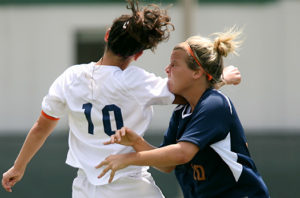
The research was conducted by Corbit Franks, assistant professor and clinical education coordinator for athletic training at the University of Mississippi. He collaborated on a literature study with Jeffrey Parr and Mary King of Southern Miss.
“Our purpose was to bring together high-quality peer-reviewed research into one singular review paper for clinicians, coaches and athletes and also see how much ADHD actually does affect the risk, the assessment and the recovery of concussion,” Franks said in an interview with the University of Mississippi.The overlapping symptoms shared between ADHD and concussions include fatigue and sleep imbalances, emotional irregularity and difficulty focusing. Therefore, Franks said, when an athlete with ADHD is concussed, it becomes difficult to determine which symptom belongs to which condition.
According to the study, ADHD affects about 4.2-8.1% of young athletes, and evidence from the study indicates that athletes with ADHD could:
Be up to 2.5 times more likely to sustain a concussion, possibly due to impulsivity and risk-taking behaviors
Report more severe or prolonged postconcussion symptoms
Experience differences in baseline neurocognitive testing or preconcussion testing, which can complicate concussion diagnosis and management
The baseline concussion test results for an athlete with ADHD might not be accurate, causing them to be over- or underdiagnosed which can hinder their care once a concussion occurs, Franks said. The study found that athletes with ADHD take four to six days longer to recover from a concussion.
“Return-to-learn strategies and return-to-play protocols may need to look completely different for that sector of individuals, rather than our traditional way we’ve all done things,” he continued.
Franks suggested a multidisciplinary care model, including integrated support from neuropsychologists, trainers and doctors is essential for personalized recovery.
“Recognizing ADHD as a modifier can lead to more accurate diagnoses, better symptom interpretation and safer return-to-play decisions,” Parr said. “It also highlights the need for athletic trainers to be particularly aware of which athletes have an ADHD diagnosis.”
You Might Also Like


Latest News
NATA issues safety tips ahead of preseason practices, return to school
The National Athletic Trainers’ Association (NATA) has updated its secondary s... Read more »NCAA approves funding for women’s flag football championship
The NCAA Board of Governors approved funding for a championship and sport commit... Read more »Videos