Why strength and conditioning coaches must keep learning
Robb Rogers has been in the strength and conditioning industry for four decades, training athletes at every level — from high school and college athletes all the way to the pros.
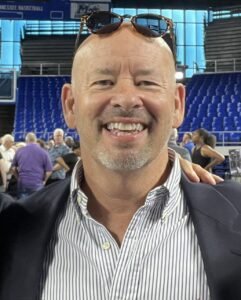
“I’ve been fortunate to see a lot of different professional entities and organizations and … observe culture and observe trends and observe the commonalities and the differences in how we train,” he told Training & Conditioning.
Rogers is now an exercise physiologist for U.S. Customs and Border Protection. He oversees agent curriculum and testing, ensuring standards are being implemented across the program.In the following interview, which has been edited for clarity and conciseness, Rogers discusses his career, the evolution of the strength and conditioning profession, athletic culture and the opportunities available for up-and-coming coaches.
Q: You’ve worked with athletes at all levels. Is there a through-line or a certain strategy you employ across the board?
A: I’ve introduced patterns of movement, and as you introduce it and you read it and refine it and eventually master it, that’s the art of coaching.
You may not understand verbally, but you may understand visually. You may not understand verbally or visually, (you may understand if) I kinesthetically palpate you. … So, teaching the cues, but understanding how to teach the why behind the cue. … In a minute, teach them the concept and improve them, that’s the art of coaching — meeting them where they are, leading them, mentoring them and assisting them to where they want to go.
As a strength coach, I can’t win unless you win. … Part of winning is you preparing so that you can start or you can play.
Q: How have you changed as a coach over the course of your career and how have you seen the profession change?
A: As you age, you get much wiser with your use of words and you learn you can’t just jump in and do it anymore. You learn how to use words way better than “Give me that and I’ll show you how to do it.”
When I started, there were two of us. … We had our hands full just getting people to do a little running and lift weights. As the profession progressed through the 80s, all of a sudden, we got percentages, so now we could control the load and the volume in order to influence the outcome. That was big.
Then … there was a premium put on recruiting speed; all of a sudden, speed, acceleration and change of direction became more important. Then it was injury prevention, because if they’re not available, we can’t win. … Then it was nutrition and recovery.
We went from this mom-and-pop operation to now you have these performance staffs. … Everything changes all the time.
Q: What does athletic culture look like now versus when you first got into the profession?
A: When I first got in the profession, there was no year-round school.
That’s the art of coaching — meeting them where they are, leading them, mentoring them and assisting them to (get) where they want to go.
Everybody went home in the summer. You sent them home with a workout book and they come back and you do a little testing and you start camp. … Then you had the offseason with the strength coaches and then the coaches got off the road from recruiting and you did … a whole bunch of agility and movement stuff that the coaches did usually early in the morning. That was the crucible; that was your toughness crucible that you put them through.
As sport moves away from sport and competition into this entertainment area and all this money, now we’re seeing that more and more athletes don’t want to do this full preparation time; they want to skip ahead and just go to performance time. But the preparation has gone up, and the more control we had, the more we influenced the outcome, the more we could keep people healthy, the more we could make things happen on the physical side with control. We’re relinquishing that now because it’s entertainment.
You’re asking a kid to gain muscle mass and to be internally motivated to get up and eat, … to do the right thing at the right time on his own. I don’t know how many other people know 18-, 19- and 20-year-olds that are real good at doing things on their own.
Q: What would you tell up-and-coming strength and conditioning coaches know about the profession?
A: The opportunities are expanding exponentially for strength conditioning professionals and dual-certified athletic trainers, because now I can understand that gap that is that we call return to play or reconditioning. That’s an art form in of itself because world-class athletes are different, that’s why they are world-class.
It used to be only at colleges where there was a strength coach. Then it migrated into high school and now some of the high school jobs are actually better than the college jobs in terms of your facility, in terms of longevity, stability, in terms of pay. In addition to that, it’s gone into the private sector.
Now, it’s gone into the military. In 2010-2011, the Navy SEALs were exploring hiring strength and conditioning coaches. … From there it’s gone down into the Army with the H2F program. They’re hiring six strength coaches for every battalion and they’re over 20-some-odd battalions … and it’s saving multiple millions of dollars. The concept is … if we teach them to train better on the front end, they’re healthier longer and we don’t have to pay to fix them; they’re not broke when they retire and we don’t have to retire them with disability.
The key is you’ll never stop learning if you’re really in this. I have athletes teach me. I have students teach me. I have colleagues teach me, and you’re always learning. … We’re learning the “why” behind the “what.”
You Might Also Like