In-game video replay is changing sideline coaching
Competitive football programs across the country have been hearing about in-game video replay technology for several seasons now. The pitch is straightforward: See the play faster, adjust sooner, win more.
But there is a difference between a compelling pitch and a tool that actually holds up on a Friday night or a Saturday afternoon when the game is on the line.
Having worked closely with programs at every level, from high school to NCAA Division I, here is what separates real impact from hype: It comes down to whether the tool fits the workflow, performs reliably under pressure and gives coaches information they can actually act on in real time.What coaches are actually using it for
The value is clarity. When a game is moving at full speed, sideline coaching depends on imperfect information. Viewing angles are limited, communication is loud and player feedback is incomplete.
In-game video closes that gap.
Coaches reviewing a clip can quickly answer the questions that decide drives. Was it a coverage bust or a leverage issue? Was the alignment right but the technique wrong? Did protection break down or did the ball come out late? Instead of guessing, staff can diagnose the issue, communicate it and coach the correction before the next series.
The biggest advantage of in-game video replay
The biggest advantage of in-game replay is not what happens at halftime. It’s what happens on the sideline, between series and sometimes even mid-drive.
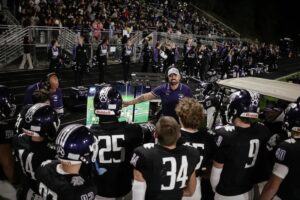
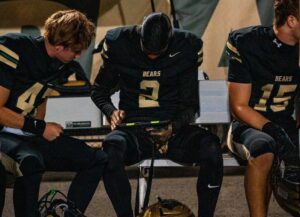
When coaches have iPads on the sideline, they can pull up a clip the moment a player comes off the field and show them exactly what they are being coached on, just as it works in a film session. Players don’t just hear the correction. They see it. That visual reinforcement closes the gap between what a coach sees from the sideline and what a player understands in the moment.
Teams don’t have to wait until the locker room to fix what’s breaking down. A protection issue that surfaces on the first drive can be corrected before the second. A coverage breakdown can be addressed between series rather than compounding into a score. The adjustment window shrinks from minutes to seconds.
For states with rules governing on-field technology, such as Texas, where replay is permitted only from the press box, the workflow looks different. Still, the principle holds: The faster information moves from review to player, the faster the team adjusts.
What in-game replay actually enables
The advantage is not simply having replay access; it is the ability to correct issues while the game is still being played. Coaching staff report clearer communication across roles, more direct teaching moments with players and a stronger ability to identify recurring problems before they compound into a score against.
In other words, it integrates the film room process into the game flow without slowing down the game. That is the substance behind the hype.
Where programs get tripped up
As more programs have adopted in-game replay, reliability has become the variable that separates the tools that deliver from the ones that disappoint. The system is only an advantage if it works consistently — in environments with crowd interference, varying infrastructure and fast-moving communication.
When systems experience delays or technical interruptions, even briefly, it slows adjustments and distracts staff during critical moments. Programs that have gotten the most out of in-game replay are those that have prioritized reliability and stability over simplicity and price.
For example, Milton High School in Georgia switched to GameStrat after experiencing issues with other platforms. They switched over and their system was ready for operation before their nationally televised pro-stadium matchup against Buford High School.
Milton is widely recognized as one of the top high school football programs in the country. Competing at the highest level in a state known for elite talent, the Eagles consistently face top-tier competition week in and week out and rely on GameStrat to maintain their edge. Coach Ben Reaves commented on the mid-season switch, highlighting its efficiency.
What coaches and ADs should actually evaluate
Here is what actually separates systems that stick from systems that sit unused after Week 3.
Transfer speed matters more than camera quality. Both angles need to be available within seconds of the play ending, not minutes. A two-minute delay is not real-time. It is archive footage arriving at the wrong time.
The setup must be fast enough for your staff. If game-day setup requires 45 minutes and a dedicated technician, your coaching staff will resent the system before kickoff. The best systems are operational in under 10 minutes and require no ongoing technical management during the game.
Support availability is non-negotiable. If something goes wrong at 7:45 p.m. on a Friday, you need someone to answer. Any system without dedicated game-day support is not ready for game-day use. Period.
Integration with your film platform saves time. No matter which platform you use, in-game replay should feed into it, not replace it. Postgame tagging and export should require no extra steps.
Budget and program fit matter too. For athletic directors managing tight athletics budgets, the question is whether this investment has a clear value proposition. The programs that deliver the best returns treat in-game replay as a coaching tool. When head coaches are using it to drive adjustments during the game and at halftime, the competitive value becomes evident.
The bottom line
In-game video replay is not hype. For programs that have intentionally implemented it, it is one of the most practical tools for real-time decision-making. The teams that are benefiting most are not the ones with the newest equipment; they are the ones that diagnosed faster, communicated more clearly and corrected before it cost them a game.
Tunch Akkaya is the founder and CEO of GameStrat, a leading provider of real-time in-game video replay technology used by 1,000+ high school programs and 100+ D1 FCS and D3 teams across the country. With a background in software engineering and experience playing football at the university level, Tunch built GameStrat to solve the workflow problems coaches face on game day.
You Might Also Like