
States can adopt 90-second possession clock for high school girls lacrosse
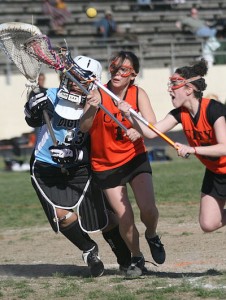
The new rule outlines the requirements for adopting a possession clock, giving states the option to implement the measure to help reduce stalling and increase the pace of play.
According to Barb Martinichio, chair of the NFHS Girls Lacrosse Rules Committee, the implementation of a possession clock in high school girls lacrosse has been a topic of conversation for several years.“The rules committee has been monitoring the New York State Public High School Athletic Association’s 90-second possession clock experiment over the past two years and with overwhelming state association support for state adoption, the committee felt this was the next step in the evolution of the game to support the development of the student-athletes,” Martinichio said in a news release.
The NFHS Girls Lacrosse Rules Committee made several other rule changes.
Beginning Jan. 1, 2031, home team jerseys must be white, aligning girls lacrosse with other NFHS uniform requirements and removing ambiguity.
Another revision concerns pocket stringing, providing more detailed guidance on equipment, clarifying that the pocket must be attached directly to the head through stringing holes. The update aligns with USA Lacrosse standards and eliminates nonintegral stringing that can create a competitive advantage. It also establishes clearer parameters for officials to reduce gamesmanship and addresses elastic filaments that allow the pocket shape to change dynamically during the play.
Clarifying language was also added to the illegal switching of sticks. The revised rule explicitly states that players cannot switch sticks with another player on the field or receive a stick from the bench area during live play without properly entering and exiting through the substitution area. Stick changes remain permitted after a goal is scored and during timeouts.
Additional changes addressed crosse inspection, ensuring the ball is mobile from sidewall to sidewall on the front and upper third of the back of the pocket, allowing players suspected of injury to remain in the game when it is determined that no healthcare provider or coach is needed to enter the field and attend to the player and establishing guidance for when a goal counts following the release of a shot before the horn ending the quarter or overtime period.
“The rules committee prioritized creating equitable and fair rules around stick-stringing and exchange rules, improving pace and game flow while creating consistency with other NFHS rules codes,” said Lindsey Atkinson, NFHS director of sports and liaison to the NFHS Girls Lacrosse Rules Committee.
According to the 2024-25 NFHS High School Athletics Participation Survey, 99,292 girls participated in girls lacrosse at 1,682 schools in the country. A complete listing of the girls lacrosse rules changes will be available on the NFHS website.
You Might Also Like



Latest News
States can adopt 90-second possession clock for high school girls lacrosse
The NFHS has approved the use of a 90-second possession clock for high school gi... Read more »Study shows decline in women college head coaches
A University of Minnesota study shows a slight decline in the number of women co... Read more »Videos